
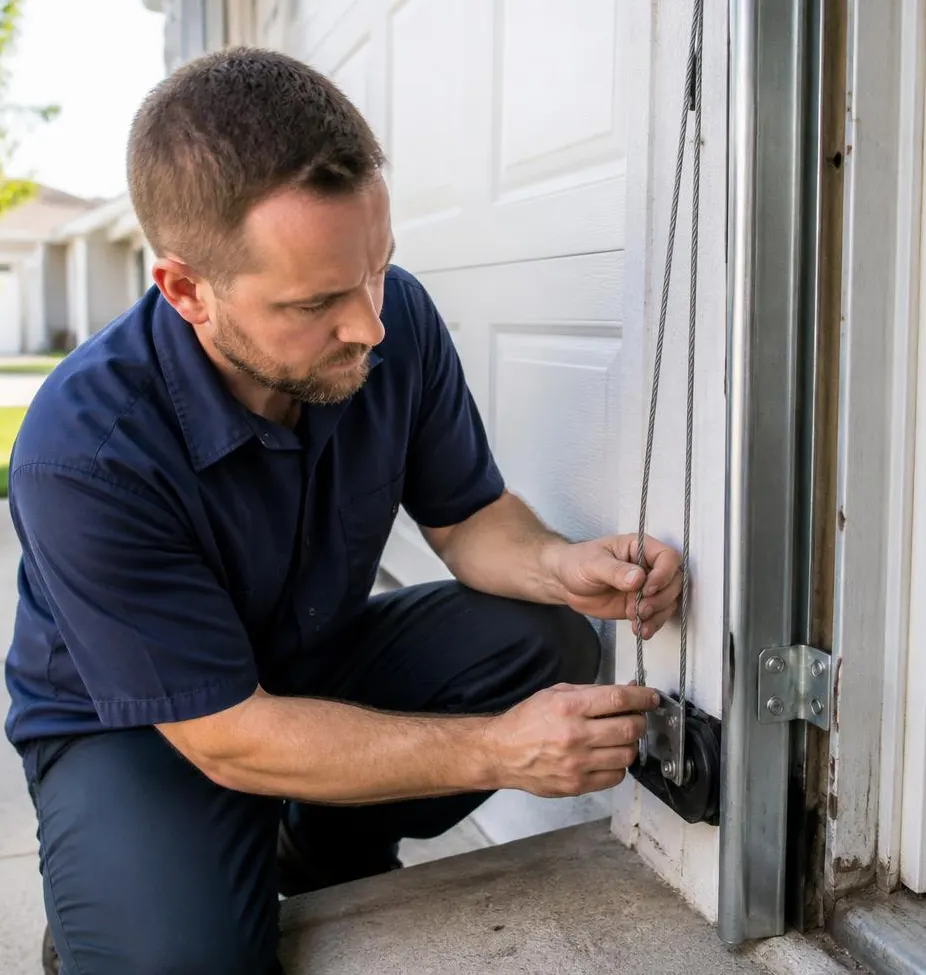
If cold air, water, dust, or the occasional mouse is getting into your garage, the culprit is usually the rubber seal running along the bottom of the door. It's one of the cheapest parts on the whole system, and on most doors a homeowner can swap it out in under an hour with basic tools. Here's how to do it right, and where to stop and call someone.
Why Bottom Seals Fail Faster Around Here
Ocean County winters are hard on rubber. Repeated freeze-thaw cycles make the seal stiffen, crack, and lose its grip on the door. Road salt tracked in on tires and boots breaks down the material even faster, and nor'easters push wind-driven rain sideways under doors that have even a small gap. A lot of the housing stock in Barnegat, Manahawkin, Waretown, and the surrounding towns still has original garage doors and seals, which were never designed to last this long. By the time a seal is 8-10 years old, it's usually flattened, torn in spots, or pulled loose from the track.
Signs the Seal (Not the Whole Door) Is the Problem
- Daylight visible under the closed door
- A cold draft at floor level even with the door shut
- Water pooling just inside the garage after rain or snowmelt
- Leaves, dust, or small debris blown in along the bottom edge
- Visible cracking, flattening, or chunks missing from the rubber
- Evidence of mice or insects getting in at floor level
If the seal looks intact but the door still won't sit flush, that's often a track, panel, or leveling issue rather than a weatherstripping problem — more on that below.
Tools You'll Need
- Replacement bottom seal (T-style, bulb-style, or bead-style, matched to your existing track — bring the old piece or a photo to the hardware store)
- Utility knife or scissors
- Flathead screwdriver or seal-removal tool
- Soapy water or silicone spray (as lubricant, not soap for cleaning)
- Tape measure
- Rags
Step-by-Step: Replacing the Bottom Seal
- Open the door partway and secure it so it can't come down on you — most residential doors can be propped open and locked in place with the opener disengaged, or you can have a helper hold it.
- Find the retaining track running along the bottom of the door panel. The old seal slides out of this track, usually by pulling one end free and sliding it lengthwise.
- Remove the old seal completely, including any stiff or broken fragments left behind. Clean the track with a rag so grit and old debris don't keep the new seal from seating.
- Measure the door width and cut the new seal slightly long — it's easier to trim excess than to come up short.
- Lubricate the new seal's edge with a little soapy water or silicone spray so it feeds into the track more easily.
- Feed the seal into the track from one end, working it through slowly and evenly. Avoid stretching it, which can cause gaps later.
- Trim the excess flush with each end of the door once it's fully seated.
- Close the door and check for daylight along the full width. Press a hand along the bottom edge from inside to feel for drafts.
What a Homeowner Can Handle vs. What Needs a Technician
Replacing the bottom seal itself is a reasonable DIY job for most people — it doesn't involve the spring system or electrical components. The same goes for basic side and top weatherstripping (the vinyl or rubber strips along the door frame), as long as the frame itself is square and undamaged.
Call a technician instead if:
- The door won't sit flat even with a new seal, which usually points to a bent track, worn rollers, or a panel that's warped or off its hinges
- The seal keeps tearing out of the track repeatedly, suggesting the track itself is damaged
- You notice gaps that change shape as the door moves, which can mean a spring is unevenly tensioned and the door isn't closing level
- The weatherstripping job is on a commercial overhead door, where sections and hardware are heavier and higher off the ground
Anything involving the torsion spring, the opener's travel limits, or a door that's binding on its tracks should go to a professional — those parts carry enough stored force to cause real injury if mishandled.
When to Call Barnegat Garage Door Works
If you've replaced the bottom seal and you're still getting drafts, water intrusion, or a door that won't close flush, it's worth having it looked at before the first hard freeze. Barnegat Garage Door Works handles full garage door maintenance visits that cover more than just the seal — checking track alignment, roller wear, hinge condition, and spring balance, all of which affect how well a door seats against the weatherstripping. For doors with bent tracks, damaged panels, or seals that won't stay in place, our garage door repair service sorts out the underlying issue instead of just patching the symptom.
If your garage door has been letting in cold air, water, or pests this fall, give Barnegat Garage Door Works a call. We serve Barnegat, Manahawkin, Waretown, Forked River, Tuckerton, Stafford Township, Little Egg Harbor, and Lacey Township, and we can usually get a technician out before the next nor'easter rolls through.